
Top Dollar Coins Worth Far More Than $1
U.S. dollar prices range from $100 to $1,000,000 on online markets. One of the top auction records is $7,680,000 for the 1804 silver dollar. Before selling or buying items, always check the mint mark and condition.
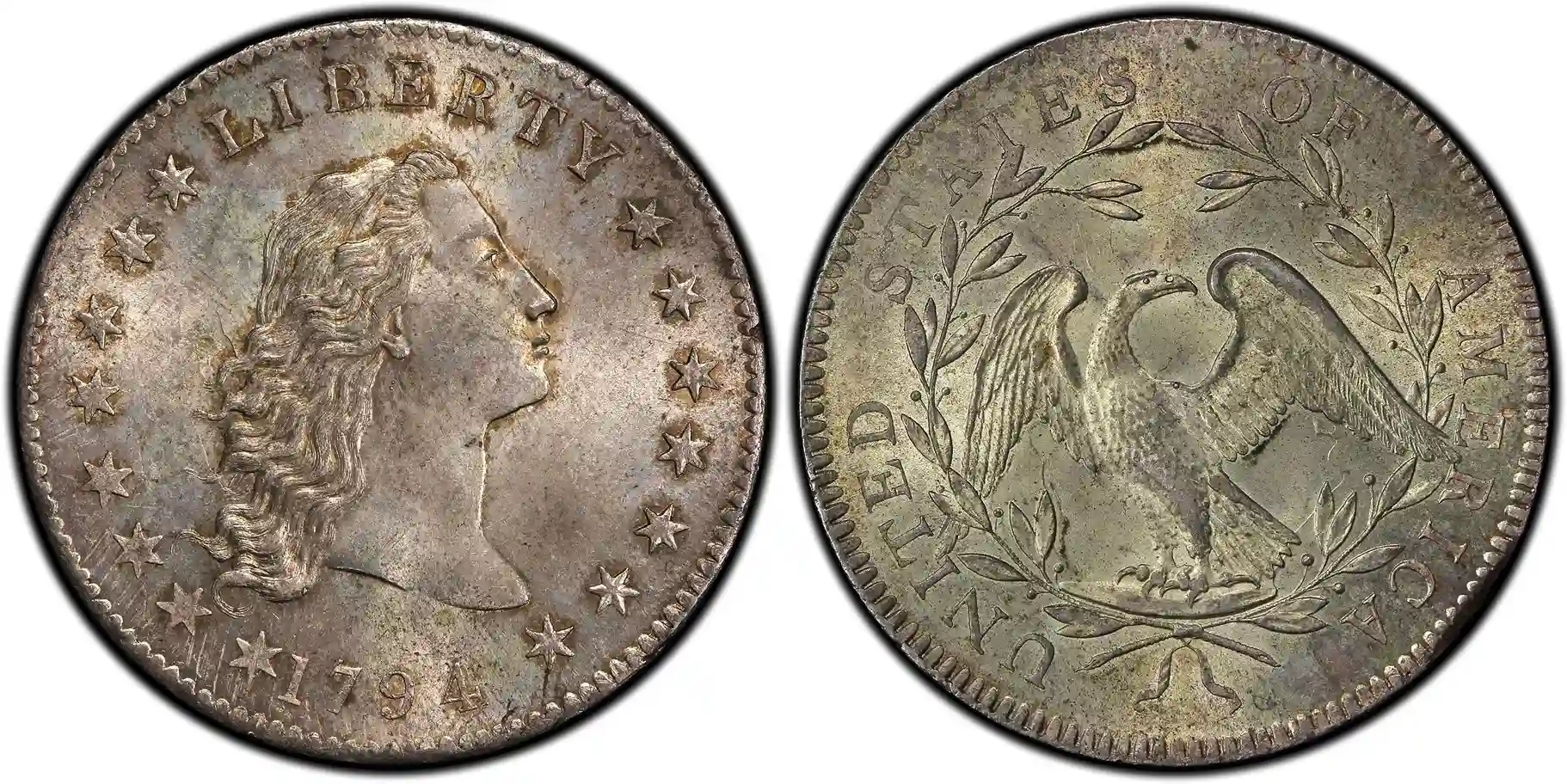
1794 Item
Year | 1794 |
Diameter | 40.00 mm |
Weight | 27.00 g |
Composition | 90 % Silver |
Edge | Lettered |
The Mint Act of 1792 authorized the creation of the dollar coin, but technical difficulties delayed production for two years.
When the Philadelphia Mint finally struck the first batch in October 1794, workers utilized a hand press that lacked the power to stamp the metal blanks cleanly.
As a result of this equipment limitation, most surviving issues show weak detail on the left side of the design. Mint officials produced 1,758 silver dollars in 1794. Numismatists estimate that fewer than 150 of these coins survive today.
The obverse features a portrait of Liberty with loose, unbound hair.
Fifteen stars surround the central bust to represent the states in the Union at that time.
The reverse depicts a small eagle inside a simple laurel wreath.
One exceptional specimen, widely believed to be the first dollar coin struck, sold at auction for over $10 million.
1804 Item
Item Mintage – 1,758 pieces
Diameter | 40.00 mm |
Weight | 27.00 g |
Composition | 90 % Silver |
There are three item types:
Class I – workers struck eight coins in 1834 for the original diplomatic presentation sets.
Class II – a single coin exists, struck over an 1857 Swiss shooting thaler, which resides in the Smithsonian Institution.
Class III – mint employees illegally struck six more coins between 1858 and 1860 to sell to private collectors.
1870 S Seated Liberty Dollar
Item Mintage – 15 pieces
Diameter | 38.10 mm |
Weight | 26.73 g |
Composition | 90 % Silver |
In 1870, construction began on the new physical facility for the San Francisco Mint. To mark the laying of the cornerstone, the Mint director ordered a small number of unique coins that featured the S mint mark.
Official government records do not list the production of any San Francisco silver dollars. Because no official production records exist, each discovery of a 1870 S dollar causes immense excitement in the coin market.
1893 S Morgan Silver Dollar
Item Mintage – 100,000 pieces
Diameter | 38.10 mm |
Weight | 26.73 g |
Composition | 90 % Silver |
The mint released these coins directly into commerce rather than storing them in canvas bags, because the local economy needed circulating currency,
1928 Peace Silver Dollar
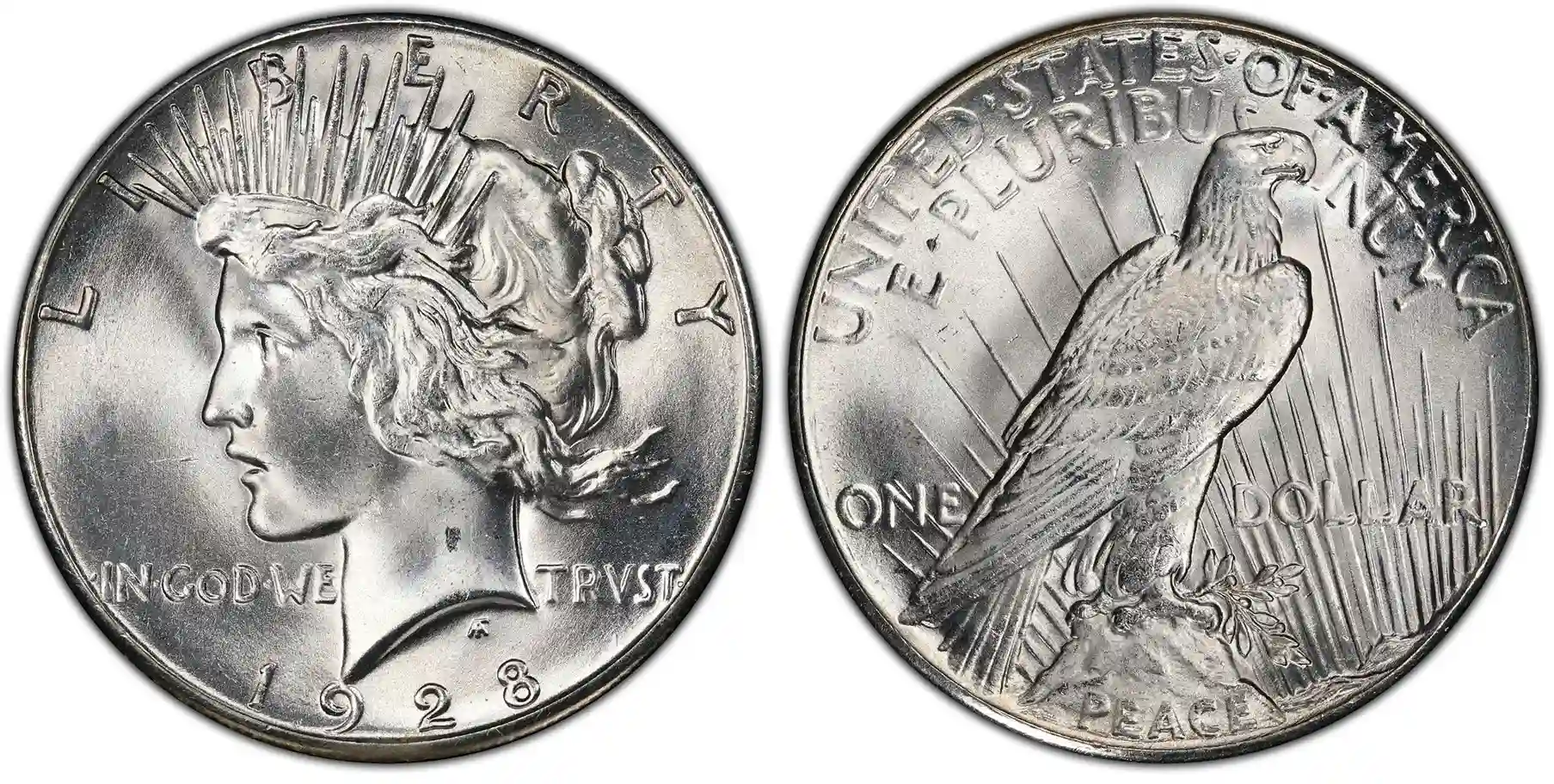
The Pittman Act of 1918 required the U.S. government to melt millions of Morgan dollars to assist the British war effort and then replace them with new coins. The resulting Peace dollar series began in 1921. By 1928, the Mint finally fulfilled the total replacement quota required by law.
Item Mintage – 360,649 pieces
Diameter | 38.10 mm |
Weight | 26.73 g |
Composition | 90 % Silver |
The mintage number represents the lowest mintage figure for a standard regular-issue coin in the entire Peace dollar series. Collectors prize the 1928 Philadelphia variety above all other standard dates in the series.
Proof Trade Dollars
The U.S. government introduced the Trade dollar in 1873 with a specific goal: to compete with the heavy Spanish and Mexican silver dollars that dominated commerce in China and East Asia. These coins contained slightly more silver than a standard domestic silver dollar.
While the Mint produced millions of business-strike Trade dollars for export, it also struck tiny quantities of mirror-like proof coins for domestic collectors. Production ceased entirely for business strikes in 1878, but the Mint continued to strike proof-only editions for collectors until 1883.
Year | Proof Mintage | Historical Context |
1878 | 900 | Last year of standard business production |
1880 | 1,987 | Strict proof-only distribution for collectors |
1883 | 979 | Final official year of the proof series |
Rare Dollar Authentication
Authenticity rests upon exact physical measurements. Counterfeiters often use cheap base metals that fail to mimic the exact weight and density of genuine United States Mint blanks. Which dollar coins are worth money?
Early Dollars 1794–1803
Classic Dollars 1840–1935
Modern Copper-Nickel 1971–1978
Modern Golden Dollars 2000–Present
Common Counterfeits and Altered Mint Marks to Avoid
High values attract sophisticated international counterfeiters. Fraudsters often use two methods to deceive unsuspecting buyers.
Added Mint Marks – a criminal removes a microscopic "S" or "CC" letter from a common coin and soldered it onto a rare-date Philadelphia coin. Look for a faint solder line or unusual metal coloration around the base of the letter.
Cast Fakes – deceptive operators pour molten metal into crude molds. These fakes display a soft, soapy texture, rounded details, and lack the sharp metal flow lines of a genuine struck coin.
Dollar Coin Value Chart
Item | Year | Value |
Silver Dollar | 1804 | $6,000,000 |
Silver Dollar | 1794 | $50,500+ |
S Morgan Silver Dollar | 1893 | $3,000+ |
Peace Silver Dollar Philadelphia | 1928 | $185+ |
The prices in the table are average, and the auction prices are higher.
Where to Buy a Rare Dollar Coin
Top Auction Houses
Heritage Auctions – the largest numismatic auctioneer in the world, frequently handling seven-figure collections.
Stack's Bowers Galleries – a historic firm that regularly auctions elite cabinets and foundational American rarities.
GreatCollections – a fast-growing, certified-only online coin auction platform trusted by major collectors.
Major National Coin Shows
Attending a major convention allows you to inspect hundreds of potential purchases in person and negotiate directly with top dealers.
ANA World's Fair of Money – the most prestigious annual show in the United States.
FUN (Florida United Numismatists) Show – a massive winter show that traditionally kicks off the annual coin market.
The Certified Coin Exchange
An online, dealer-to-dealer network that also allows advanced collectors to view active inventory from hundreds of vetted firms simultaneously. It acts as a digital trading floor for certified U.S. coinage.
Always buy rare dollar coins already sonically sealed in third-party grading holders. Never buy raw high-value dollar coins from unverified online marketplaces or estate sales, as the market contains countless sophisticated counterfeits.